'Hum' - by Helen Phillips | Capitalist tech VS nature's solace
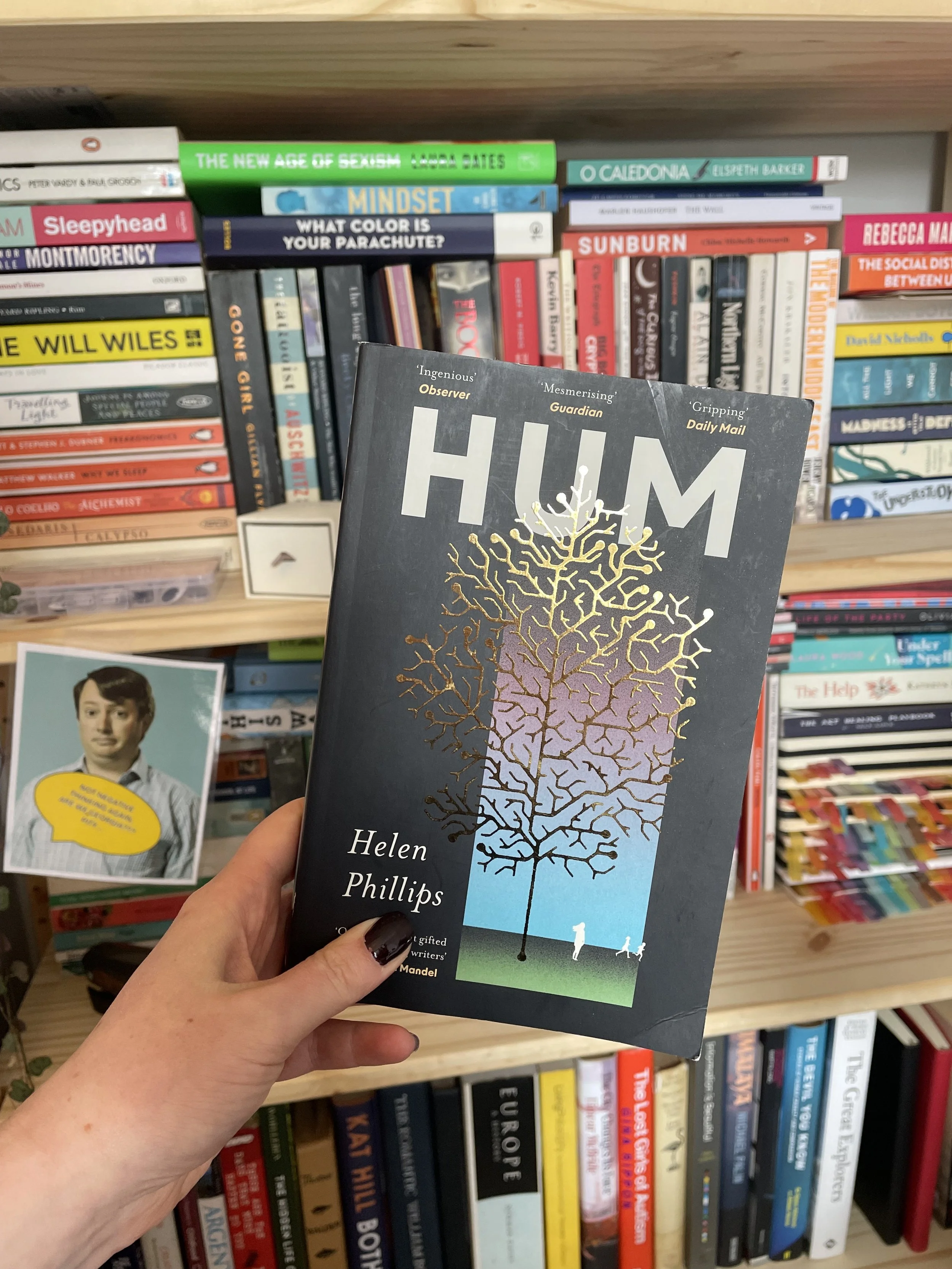
Published in 2024, ‘Hum’ by Helen Phillips is an accomplished and thought-provoking Dystopian text that follows a family’s day-to-day life and difficulty navigating an unpredictable scenario whilst on the trip of their dreams. If you’ve previously enjoyed Kazuo Ishiguro’s ‘Never Let Me Go’, Ian McEwan’s ‘Machines Like Me’, and if you’re looking for a novel that provides ethical conundrums, modern relatability and technologically fuelled tensions, this might be one for you.
With a clean and unfussy writing style, this snacky 244 pager explores core themes of environmental destruction (typical of the dystopian genre), parental anxiety when navigating addictive technologies, the difficulties and tensions shepherding digitally-native children and a family’s fluctuating economic status. It additionally explores the innate link between harsh female beauty standards and Capitalist gains, and the self-monitoring behaviours required when living in a surveillance state. Cheery stuff, huh!? It’s so of-the-moment relatable. Phillips holds a mirror up to a painful paradox - the more frictionless modern life becomes with embedded technologies, the more resistance and autonomy is craved. And once the family’s socioeconomic status is in flux, she explores how the barriers to re-entry in this Middleclass world are increasingly challenging. This book had me feeling engaged and icky at the same time. And THAT makes for a fantastic Dystopian read…
The third-person narrative perspective follows the family’s breadwinner May, her gig-worker partner Jim, and her two young children Lu and Sy as they navigate day-to-day life from a cramped apartment in an urban city setting. The family coexists with a broad network of ‘Hums’ (AI/robot machines) who have replaced humans in certain job sectors and within the city’s infrastructure. Having lost her job, May decides to partake in a medical trial to physically alter her face to prevent it from being detectable by facial recognition software. The money is a lifeline for her struggling family, enabling them to book an exciting trip to a gate-kept garden paradise - an experience she hopes will provide happy memories much like her own. The book offers a nostalgic nod to the beauty of a forest May experienced in her own childhood and is a recurrent motif in moments of stress or overwhelm. Phillips sets up this craving against an environmental backdrop of oil spills, air toxicity and natural degradation - simple activities like going to the coast become harmful for fear of negative health outcomes for her children. May and Jem are left craving respite and solace from nature in the manicured replicant of their natural world - the ‘Botanical Garden’ - with cash in her pocket she books them a mini break and is up-sold overpriced perks along the way.
Avoiding too many spoilers, on arrival to the venue, May makes a grave mistake. The novel unfolds exploring the bliss and pain of their experience. This book forces us to question how far parents will go to raise their children in the way they think is right versus what is mandated. It also explores the emotional turmoil navigating relationships and communication with partners and children using AI automated responses. The constant questioning of whether one’s partner is being thoughtful or lazy and which message responses are theirs versus a robots’ suggestions adds an interesting emotional dynamic.
Fast-forward to 2026, reading this novel felt unnerving, principally because the technological advances of finger-print identification, facial recognition and voice-activated purchase cycles felt a bit gross, quite futuristic and unwanted. Yet, I quickly realised that society is living this in real-time. I am living with this technology embedded into my every day existence as a reader and yet when it was outlined on the page my discomfort became apparent. Do we really have a choice about whether we adopt these technologies? If we are to maintain healthy economic standing within a Capitalist system, our autonomy does seem murky. When life is fast-paced and full-on, the space between a desire for ease and efficiency leaves us quite vulnerable. From data-protection and incessant Marketing messaging, private moments versus performance, the lines are increasingly blurred and complex. What is also interesting later in the novel is the Hums’ own understanding and moral take on the system.
I really enjoyed this book and would rate it 5/5 stars. Here’s to continuing the dystopian reading adventures!